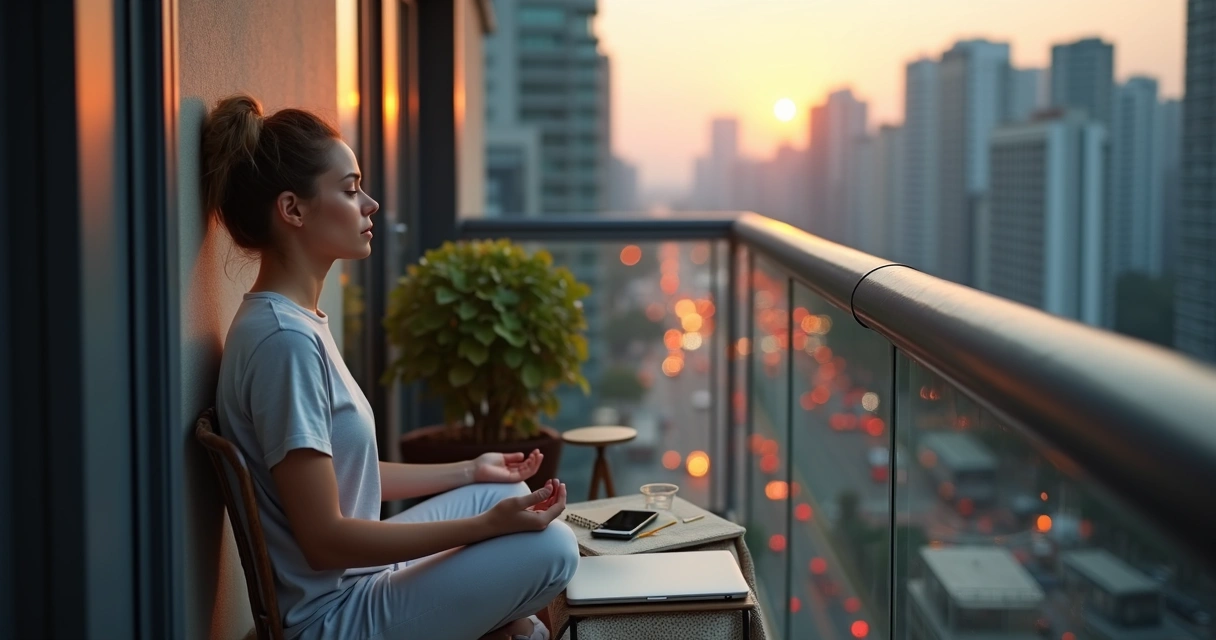
City life moves fast. Noise starts early. Messages arrive before breakfast. We rush, react, and carry stress from one place to the next. In our experience, many people do not fail at emotional self-regulation because they are weak. They fail because their day gives them very little room to pause.
Emotional self-regulation is the ability to notice what we feel, slow our reaction, and choose a healthier response.
This matters even more in urban life, where pressure often feels normal. A representative urban study on perceived stress found that 52% of people had high stress, while only 19% had low stress. The same research linked stress with loneliness and poor physical surroundings. We think that explains a lot. Stress is not only in the mind. It is also in the pace, the noise, the crowding, and the lack of real rest.
We have seen this in small daily scenes. A person misses the train and snaps at a friend. Another opens a work email at night and cannot sleep after. A parent comes home tired and answers a child with a hard tone, then feels guilt for hours. These moments look small from the outside. Inside, they are heavy.
Pause first. Act second.
Why urban life makes regulation harder
Busy cities keep our nervous system on alert. Traffic, sirens, tight schedules, polluted air, bright screens, and social pressure all stack together. After enough exposure, even minor problems can feel larger than they are.
Research also shows that the environment itself can raise emotional strain. A nationwide study on stress and polluted cities reported that students in more polluted places were about 6.67 times more likely to experience severe stress than those in less polluted places. We cannot always change the city around us, but we can change how we meet its pressure.
Self-regulation does not remove stress from city life, but it reduces the harm stress can cause in our thoughts, words, and choices.
What self-regulation looks like in real life
Many people think regulation means staying calm all the time. We do not see it that way. Regulation is not emotional silence. It is emotional guidance.
When we regulate well, we may still feel anger, fear, sadness, or frustration. The difference is that we do not hand the steering wheel to those feelings. We stay present enough to make a response that matches our values.
In practice, that can mean:
Not answering a harsh message right away.
Taking three slow breaths before entering a meeting.
Leaving a crowded room for two minutes instead of forcing ourselves to endure more noise.
Naming the feeling clearly, such as “I am overloaded” or “I feel ashamed,” instead of saying “I am fine.”
These are simple acts. Still, they change the day.
How to build regulation during a full schedule
We think the best methods are the ones people can actually do on a Tuesday at 6:40 p.m., while tired and distracted. Long routines may help some people, but urban life often asks for shorter tools that fit between tasks.
Here is a practical sequence we recommend:
Notice the first signal. It may be jaw tension, chest pressure, shallow breathing, a fast reply, or mental fog.
Name the state. Use plain words. Angry. Rushed. Drained. Afraid. Naming helps the mind organize the feeling.
Reduce stimulation. Lower the screen brightness, step away from noise, put the phone face down, or stop multitasking for a moment.
Regulate the body. Breathe out longer than you breathe in, relax your shoulders, and place both feet on the floor.
Choose one next step. Drink water, delay a reply, ask for five minutes, or take a short walk.
This sequence is short enough to use in public, at work, on public transport, or at home. It works because emotions are not only mental events. They are body events too.

Small habits that lower emotional overload
We often look for one big fix, but emotional balance in the city usually comes from repeated small acts. A few habits can lower baseline tension across the week.
Some of the most useful are:
Starting the day without checking messages in the first ten minutes.
Walking without audio for part of the route, so the mind can settle.
Eating one meal a day without screens.
Creating a short transition ritual after work, such as washing the face, changing clothes, or sitting in silence for three minutes.
Limiting late-night exposure to stressful content.
We know these habits sound basic. Yet basic does not mean weak. In many cases, what helps most is not dramatic. It is steady.
When emotions rise fast
Sometimes stress does not build slowly. It spikes. A loud interaction, a delay, a mistake, an unexpected bill, a crowded train. In those moments, we need immediate grounding.
Quick calming techniques work best when they are physical, short, and easy to repeat.
You can try:
Inhale for four counts and exhale for six counts, repeating five times.
Pressing both feet into the ground and noticing the support under the body.
Looking for five neutral objects around you, such as a door, a tree, a sign, a shoe, a window.
Washing your hands slowly and paying full attention to the temperature of the water.
We have found that these methods help because they interrupt emotional acceleration. They bring attention back to the present, where choice becomes possible again.
The body can calm the mind.
The role of reflection and honest limits
Urban life often rewards constant availability. But emotional self-regulation grows when we respect our limits instead of denying them. If every evening ends in exhaustion, the problem may not be poor willpower. It may be an overloaded pattern.
We suggest asking a few clear questions at the end of the day:
What triggered me most today?
What did my body try to tell me before I reacted?
What boundary did I ignore?
This kind of reflection builds awareness without harsh self-judgment. It helps us spot patterns. The point is not to become perfect. It is to become less automatic.

When to seek more support
There are times when self-help tools are not enough on their own. If emotional swings are intense, if stress is affecting sleep for weeks, if anger feels hard to control, or if sadness is persistent, deeper support may be needed. We see this not as failure, but as wisdom. Some burdens ask for company, structure, and care.
Busy urban life can make people delay support because they think they should handle it alone. We do not agree. Growth often starts when we stop pretending we are unaffected.
Conclusion
Emotional self-regulation in city life is not about becoming cold, silent, or endlessly composed. It is about staying connected to ourselves while pressure rises around us. We can learn to notice early signs, slow the body, reduce stimulation, and respond with more care.
Some days will still feel messy. That is part of being human. Still, each pause changes something. Each honest limit protects something. Each calmer response builds a different way of living in the same city.
If we want more balance in busy urban life, we have to practice it in ordinary moments. Not later. Now.
Frequently asked questions
What is emotional self-regulation?
Emotional self-regulation is the skill of noticing our feelings, understanding what is happening inside us, and choosing a response instead of reacting on impulse. It does not mean suppressing emotion. It means guiding it with awareness.
How to manage stress in city life?
We can manage stress in city life by reducing overstimulation where possible, creating short recovery moments during the day, improving sleep habits, setting clearer limits, and using body-based calming tools such as slow breathing and grounding. Small daily actions often help more than rare intense efforts.
What are quick calming techniques?
Quick calming techniques include longer exhales, grounding both feet on the floor, naming five neutral things you see, relaxing the jaw and shoulders, and stepping away from noise for a brief moment. These methods help slow the stress response and restore clearer thinking.
Is meditation useful for busy people?
Yes. Meditation can be useful for busy people because it trains attention and helps the mind return to the present. It does not need to be long. Even a few minutes of stillness, steady breathing, or silent observation can support emotional balance when practiced often.
Where to learn emotional self-regulation skills?
We can learn emotional self-regulation skills through books, guided practices, structured courses, reflective journaling, and support from qualified mental health professionals. The best place to start is with simple methods you can repeat in daily life, then deepen your practice over time.