


We often think our choices are fully our own. We pick a partner, handle money, react to stress, or stay silent in conflict, and it all feels personal. Yet in our experience, many of these reactions carry older roots. They come from values repeated across generations until they begin to feel natural, automatic, and beyond question.
Ancestral values are inherited ideas about safety, duty, love, status, and survival that can guide behavior without our awareness.
A person may say, “This is just how I am.” Then one family story appears, and the pattern starts to make sense. A grandfather who lost everything. A mother raised to never ask for help. A lineage that survived by obedience, caution, or sacrifice. The body learns the lesson, even when the mind does not name it.
What is inherited is often repeated.
They define what feels safe
Many unconscious patterns begin with one simple question: what did our family learn was safe? In some lineages, safety meant staying close, saying little, and avoiding risk. In others, safety meant standing out, working harder, and proving worth at all times.
We see this in daily life through patterns like:
- Fear of visibility, even when talent is clear
- Chronic people-pleasing to prevent rejection
- Discomfort with rest because action feels safer
These reactions may look irrational in the present. Still, they often came from past conditions that were very real. Families shaped by war, migration, hunger, prejudice, or instability passed down protective codes. The original danger may be gone, but the nervous system can keep acting as if it remains.
What once protected a family can later limit a person.
They shape our bond with work and money
Money habits are rarely just financial. They are moral, emotional, and historical. Some families pass down the belief that money must be held tightly because loss is always near. Others teach that worth comes only through hard labor. Some treat comfort with guilt, as if ease were a form of betrayal.
We think this helps explain why two people with the same income can feel very different inside. One feels stable. The other feels one step away from collapse.
This is not only personal impression. A National Bureau of Economic Research working paper on long-term ancestral economic patterns found that precolonial ways of making a living can still relate to education and wealth today. That tells us something powerful. Old group habits do not vanish quickly. They can keep shaping how communities and families think about effort, planning, and reward.
A short story makes this clear. We once heard of a man who saved every extra coin, yet felt panic each time he spent on something good for himself. Later he learned his grandparents survived severe scarcity. Nobody had explained it to him directly. Still, the fear had been taught in silence.
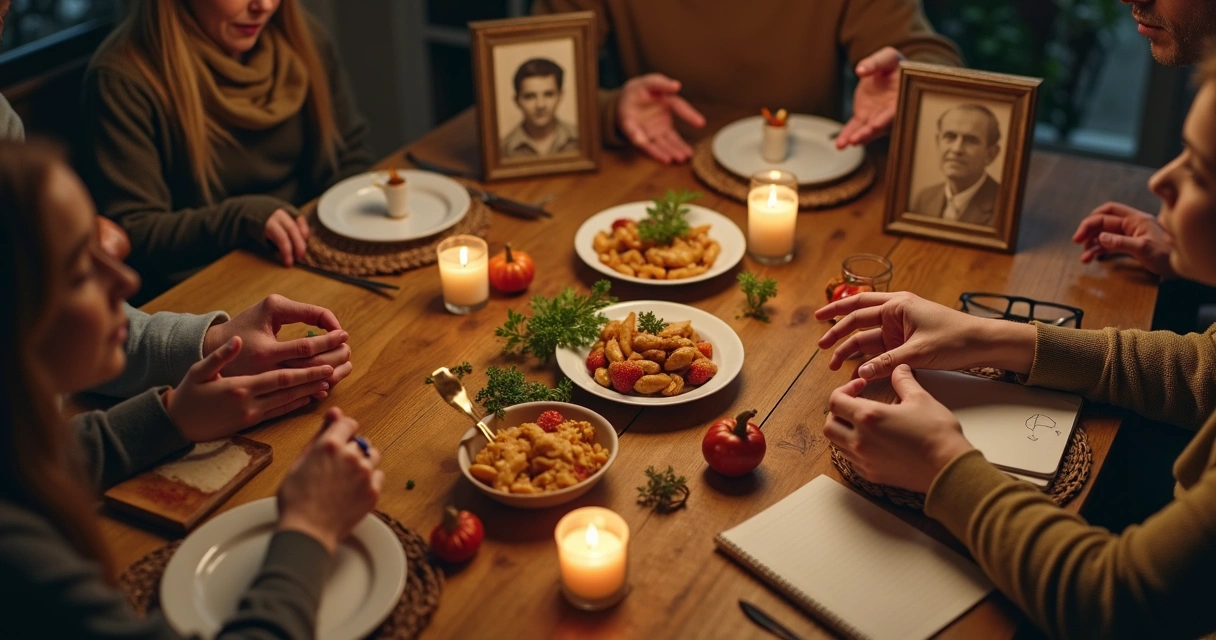
They influence love, loyalty, and emotional roles
Families do not only pass down beliefs. They also pass down roles. One person becomes the caretaker. Another becomes the strong one. Another disappears emotionally but stays physically present. After enough repetition, these roles start to feel like identity.
In our view, this is one of the strongest ways ancestral values shape unconscious behavior. A child may absorb messages such as:
- Love means self-sacrifice
- Loyalty means never disagreeing
- Strength means hiding pain
- Peace means avoiding honest conversation
Then adult relationships begin to mirror those beliefs. We may overgive, stay too long, fear closeness, or confuse control with care. Not because we choose pain on purpose, but because our inner map learned that this is how love works.
Many relationship struggles are inherited emotional rules acting in the present.
They affect spiritual meaning and unseen beliefs
Not all ancestral values are tied to money or family roles. Some come through spiritual memory. Beliefs about blessing, punishment, destiny, ancestors, and unseen influence can shape how people interpret events, illness, success, and grief.
Across many cultures, these beliefs remain active in modern life. A Pew Research Center analysis on belief in spirits and life after death around the world shows that ancestral and spiritual influence is still widely accepted in many countries. This matters because belief affects behavior. If a family sees life through sacred continuity, people may carry a strong sense of duty, reverence, fear, or protection without fully noticing how much it guides daily choices.
Sometimes this support is grounding. Sometimes it creates hidden guilt. A person may feel they must honor family expectations at any cost. Another may avoid change because breaking tradition feels like breaking belonging.
Belonging can be stronger than logic.
They guide how we face joy and well-being
It may sound strange, but even happiness can be shaped by ancestry. Some family systems carry permission for joy, play, and shared life. Others carry a serious tone, where survival came first and pleasure became suspect.
We notice that some people feel uneasy when life gets calm. They start a conflict, overwork, or expect bad news. Peace feels unfamiliar. That reaction may have deep roots in collective memory.
A PLOS One study on ancestral subsistence patterns and happiness reported a link between gathering-based ancestry and higher national happiness measures. This does not reduce people to one cause. But it does suggest that long-standing ways of living can leave emotional traces in how groups relate to satisfaction, community, and daily rhythm.
When joy was rare in the past, the present may struggle to trust it.

They shape conflict, silence, and moral judgment
One family teaches direct speech. Another teaches restraint. One sees disagreement as healthy. Another treats it like disrespect. We carry these codes into work, marriage, friendship, and parenting.
This is why conflict can feel bigger than the moment itself. A simple boundary may awaken an old fear of exile. A simple apology may feel impossible if the lineage linked error with shame.
We also inherit moral tones. Some lineages value endurance above tenderness. Others prize service but neglect self-respect. Some admire authority so strongly that questioning it feels wrong, even when harm is clear.
These patterns are often unconscious because they were normal in the environment that formed us. Nobody announced them. Everybody lived them.
They can be seen and changed
The good news is simple. What is unconscious can become conscious. We may not control what was handed to us, but we can change how we relate to it now.
A useful first step is observation. We can ask where a repeated reaction comes from instead of judging it at once. We can notice what triggers shame, fear, overwork, emotional withdrawal, or guilt. Then we can trace the pattern with honesty.
We suggest paying attention to these signs:
- You repeat a behavior you openly disagree with
- You feel strong guilt when choosing differently from your family
- You react intensely to ordinary stress or closeness
- You carry rules about love, money, or duty that were never examined
Change begins when we stop calling the pattern “my nature” and start seeing it as learned history. That shift is quiet, but strong.
Conclusion
Ancestral values shape unconscious behavior patterns by teaching us what feels safe, worthy, loving, moral, and possible long before we can question it. They influence our bond with work, our way of loving, our spiritual meaning, our comfort with joy, and our style of conflict. Some of these inheritances support life. Others keep old pain active.
We grow when we honor our roots without becoming trapped by them.
That is the deeper task. Not rejection. Not blind repetition. Clear seeing. When we understand the values beneath our habits, we gain more choice, more responsibility, and a steadier inner life.
Frequently asked questions
What are ancestral values in psychology?
In psychology, ancestral values are beliefs, emotional codes, and survival lessons passed through generations. They may involve views on family duty, money, love, pain, religion, status, or safety. Even when they are not spoken directly, they can shape attitudes and automatic reactions.
How do ancestral values affect behavior?
They affect behavior by creating deep inner rules. A person may avoid conflict, fear success, overwork, hide feelings, or stay loyal to unhealthy patterns because these responses were linked to belonging or protection in the family line. The behavior feels personal, but its roots may be older.
Can I change unconscious behavior patterns?
Yes, change is possible. The first step is noticing repeated reactions and tracing them without harsh self-judgment. Reflection, honest conversation, journaling, and therapeutic support can help make hidden patterns visible. Once seen clearly, they can be questioned and replaced with healthier choices.
What are common ancestral behavior patterns?
Common patterns include people-pleasing, fear of rest, silence during conflict, guilt around money, emotional suppression, over-responsibility, and loyalty that blocks personal growth. These patterns often began as ways a family survived pressure, loss, or instability.
How to identify my own ancestral values?
We can identify them by looking at repeated family messages and emotional habits. Ask what your family praised, feared, avoided, or treated as duty. Notice what brings guilt or tension in your own life. Family stories, relationship patterns, and money habits often reveal the values working underneath.