
We often think ethics must be taught through long talks, rules on the wall, or hard moments after someone does wrong. In our experience, it usually grows in quieter ways. It grows at breakfast. It grows in the car. It grows when we clean up after dinner and when we say sorry without excuses.
Children learn ethics less from speeches and more from repeated family moments.
That is good news. It means we do not need a perfect home to raise honest, fair, and caring people. We need steady rituals that carry values in simple forms. A family ritual can be as small as one question at dinner or one pause before bed. What matters is the meaning inside the act.
This also matches what many parents already want. According to findings on parenting values from Pew Research Center, about 66% of U.S. parents say it is extremely important that their children grow up to be honest and ethical. The wish is clear. The next step is making that wish visible in daily life.
Why rituals teach better than lectures
Children watch before they listen. We have seen this in many homes. A parent says, “Tell the truth,” but then answers the phone with, “Tell them I am not home.” The child notices. Always.
Rituals turn values into habits.
A ritual is repeated, predictable, and shared. That makes it powerful. It lowers resistance because it does not feel like a lesson every time. It feels like family life. Over time, honesty, respect, gratitude, fairness, and responsibility stop being abstract words. They become familiar actions.
Family routines also support healthy development in a wider sense. Recent U.S. Census Bureau reporting on family engagement links shared meals, outings, and parent-child interaction with emotional support, social development, and school success. When rituals are steady, they help shape both character and connection.
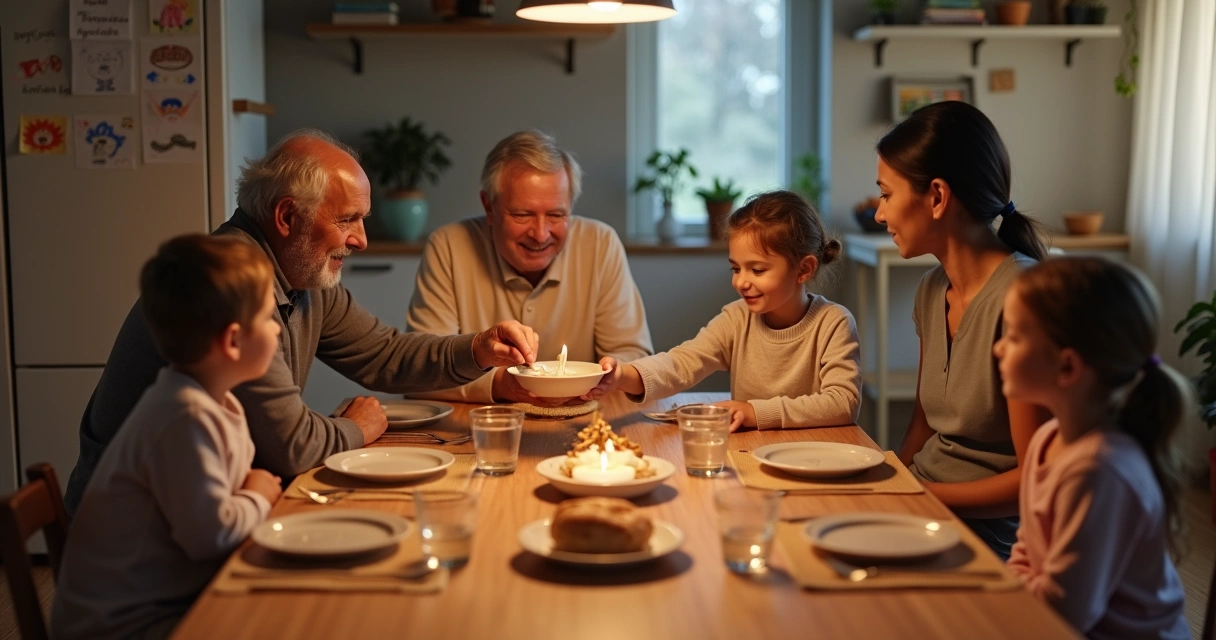
Dinner can become a moral classroom
We do not mean a formal classroom. We mean a place where daily choices are named and discussed. Dinner works well because people are already gathered, and the day is still fresh.
One family we know started a habit that lasted five minutes. Each person answered one question: “What was one fair thing you did today?” At first the children shrugged. Then one said he let a classmate go first in line. A parent admitted making a mistake at work and owning it. The room changed. Ethics became concrete.
You can build this ritual with simple prompts like these:
What was one honest moment from today?
Did you help someone who could not repay you?
Did anything feel unfair today?
What did you do when you felt angry?
Short daily questions help children connect actions with values.
There is also value in the meal itself. Sitting down together teaches turn-taking, listening, patience, and care. The U.S. Census Bureau story on family dinner patterns found that frequent family dinners are especially common in some communities, which shows how culture can strengthen family ethics through routine. We think many homes can draw from these strengths in their own way.

Morning rituals shape responsibility
Mornings are not always calm. We know that. Shoes disappear. Toast burns. Someone cannot find a notebook. Even so, morning rituals can teach ethical behavior in very direct ways.
When children make their bed, pack their bag, feed a pet, or clear their breakfast dish, they are not just “helping.” They are learning that their actions affect others. If we do everything for them, we may get speed, but we lose a chance to teach duty and respect for shared space.
We suggest choosing a few repeatable actions and linking them to meaning:
Give each child one task that supports the whole family.
Name the value behind it, such as care, reliability, or respect.
Thank effort, not only perfect results.
A child who forgets a task does not need shame. They need follow-through. “Your part matters here” is often enough. That sentence is calm, but it carries weight.
Repair rituals after conflict
No family lives without conflict. The question is not whether tension will happen. The question is what children will learn from it. If every conflict ends in silence, blame, or avoidance, that becomes the lesson.
Ethics includes knowing how to repair harm after a mistake.
One of the strongest rituals we can build is a repair process. It can be brief. It can even become a standard phrase after arguments. For example:
What happened?
Who was affected?
What can we do now to make it better?
This moves the family away from punishment alone and toward accountability. We are not saying consequences should disappear. We are saying consequences teach more when paired with reflection and repair.
Sometimes the adult must begin. That matters. When we say, “We were too harsh, and we want to correct that,” children learn that authority does not cancel humility.
Apology is a practice, not a performance.
Bedtime is a quiet space for conscience
At night, children often speak more openly. The day has slowed. Defenses drop. This is a good time for moral reflection without pressure.
A bedtime ritual can include three simple questions:
What felt good today?
Did you hurt anyone or leave something undone?
What do you want to do better tomorrow?
We like this ritual because it teaches self-observation without fear. The child is not being cornered. They are being invited to notice their own impact. Over time, this helps form an inner guide, not just obedience to outside rules.

Small acts that carry big lessons
Not every ethical ritual needs a set time. Some are woven into the day in brief, steady ways. We have found that these often stay with children because they are lived so often.
Some examples include:
Returning shopping carts instead of leaving them behind.
Greeting workers with respect and eye contact.
Letting children see us correct a billing error in our favor.
Taking turns choosing a movie or game.
Donating usable items and explaining why dignity matters.
These moments may look small from the outside. They are not small to a child. They answer silent questions: How do we treat people? What do we do when no one checks? What matters in this family?
Conclusion
We think ethics becomes real when it is repeated with warmth, clarity, and honesty. Family rituals do not need to be elaborate. They need to be lived. A dinner question, a shared task, a repair after conflict, or a quiet bedtime reflection can shape conscience in lasting ways.
Children are forming their moral voice every day. Our routines help write it. If we want them to grow into people who act with respect, fairness, and truth, we can begin in the simplest place. Home.
Frequently asked questions
What are family rituals for teaching ethics?
Family rituals for teaching ethics are repeated daily or weekly actions that carry moral meaning. They can include dinner conversations about honesty, bedtime reflection, shared chores, apology routines, and small acts of respect in public. These rituals teach values by turning them into lived experience.
How can I make ethics fun for kids?
We can make ethics fun by using games, stories, role-play, and simple challenges. A child can earn the chance to choose dessert after spotting a kind act, or the family can share one “good choice” from the day at dinner. The goal is to keep the tone light while still being sincere.
What are simple daily ethical lessons?
Simple daily ethical lessons include telling the truth, waiting for a turn, cleaning up shared spaces, thanking people, apologizing when needed, and helping without being asked. These lessons work best when we model them ourselves and link them to real moments children can understand.
Why teach ethics through family routines?
Family routines work well because children learn through repetition and example. A routine makes values visible again and again, which helps them become habits. It also lowers pressure, since the lesson appears inside normal life instead of only during discipline.
How to start ethical discussions at home?
We can start with short, open questions during calm moments. Ask things like, “What felt fair today?” or “Did you have a chance to help someone?” Keep the tone curious, not accusing. Children speak more honestly when they feel safe, heard, and not rushed.