
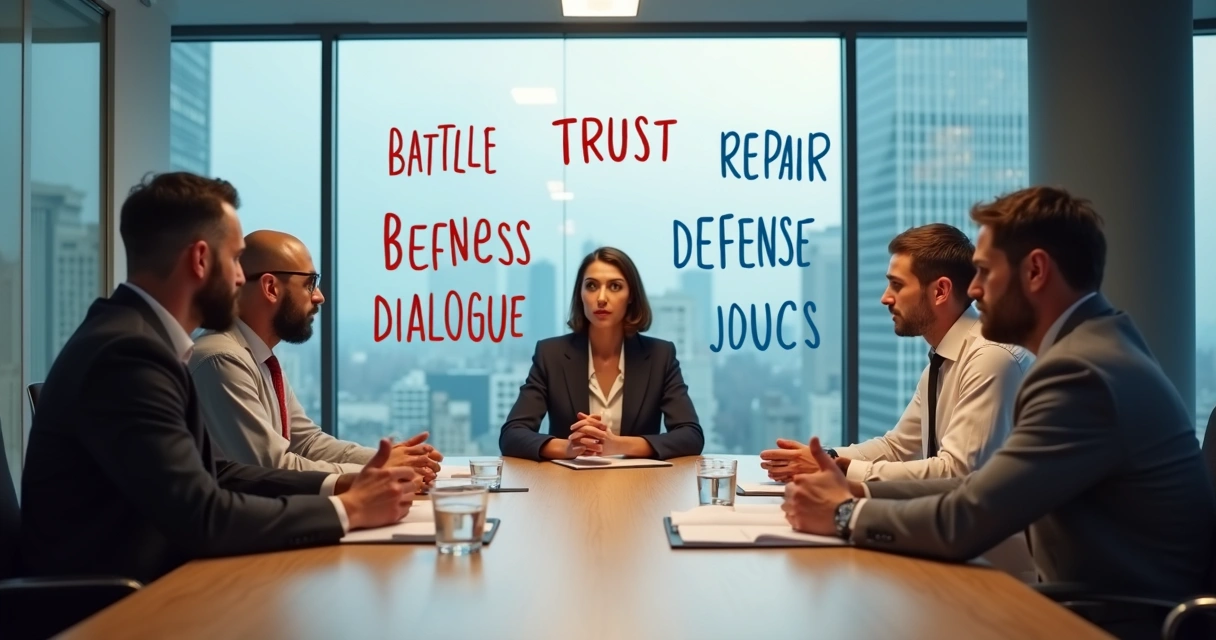
We often think conflict begins with facts, events, or opposing goals. In our experience, it often begins earlier, in the words a group uses to name what is happening. A tense meeting can be called a problem to solve, a battle to win, a mess to clean up, or a wound to heal. Each phrase points the group in a different emotional direction.
Symbolic language gives conflict its emotional shape before anyone proposes a solution.
We have seen this in teams, families, schools, and public life. Two groups may face the same tension, yet one grows more rigid while the other becomes more thoughtful. The difference is not only policy or personality. It is also language. Not plain language alone, but symbolic language, meaning the metaphors, labels, images, and shared phrases that tell people what kind of situation they are in.
Why symbols matter in tense moments
Human beings do not respond only to facts. We respond to meaning. When a group says, “We are under attack,” bodies tighten. People scan for threat. Voices harden. Nuance fades. If the same group says, “We are at a crossroads,” the emotional field changes. There is still tension, but now there is room for pause, thought, and choice.
Words prepare reactions.
This is one reason symbolic language has such force in conflict. It does not just describe reality. It organizes attention. It tells us who belongs, who threatens, what must be defended, and what kind of action feels acceptable.
Research supports this pattern. In a systematic review of 319 political framing experiments, 27.9% used at least one metaphorical frame, and 16.6% of all tested frames were metaphorical. One of the most common patterns framed politics as war. We think this matters far beyond politics, because once a group adopts war language, it becomes easier to divide the room into allies, enemies, victories, and losses.
How groups inherit conflict scripts
Many groups do not create their conflict language from scratch. They inherit it. A workplace may speak of “firefighting” every issue. A family may call disagreement “disrespect.” A community may treat criticism as “betrayal.” These phrases become scripts. People repeat them so often that they stop hearing the symbolic message inside them.
A small story makes this clear. We once watched a group discuss a budget cut. Nothing dramatic had happened yet. Still, within ten minutes, members were using phrases like “hold the line,” “take casualties,” and “do not surrender ground.” The issue was financial, but the shared language turned it into combat. People who asked questions sounded weak. People who doubted the plan looked disloyal. The group was no longer discussing options. It was preparing for war.
When a group repeats the same metaphor, it slowly trains itself to feel and act in line with that metaphor.
This also appears in mediation settings. In a survey of 85 family court mediators in Florida, metaphors for conflict and the parties were often negative, such as conflict being like war, while metaphors for mediation and mediators were more positive, such as a journey. We see a practical lesson here. The image attached to the process can either harden people or help them move.
Symbols can trigger identity defense
Not all symbols work the same way. Some are linked to deep group identity. Flags, rituals, slogans, and historical phrases can carry memory, pain, pride, and fear at once. In conflict, these symbols can pull people out of reflection and into reflex.
We should be careful here. A symbol may look simple from the outside, yet it can feel sacred to the people inside the group. Once that symbol is touched, reason does not disappear, but it often comes second.
This effect appears clearly in a study on reactions to desecration of national symbols. The findings showed stronger threat responses when people high in blind patriotism saw their group’s flag burned. That response had strong effects in the study. For us, the lesson is direct. If a group’s symbolic identity feels attacked, its conflict response can become sharper and less flexible very fast.
What harmful symbolic language sounds like
Not every strong phrase is harmful. Some help people face reality. The trouble comes when symbols narrow thought and justify emotional excess. We can usually hear the shift in a few recurring patterns.
In our observation, harmful symbolic language often includes:
War terms, such as attack, enemy, surrender, and ammunition.
Purity terms, such as contamination, poison, and cleansing.
Family rank terms, such as obedience, disrespect, and shame.
Disaster terms, such as collapse, chaos, and no return.
These forms of speech matter because they reduce the range of available responses. If the issue is contamination, people seek removal. If it is war, they seek victory. If it is shame, they seek punishment. Very little space remains for mutual recognition.
How healthier symbolic language changes the room
Groups do not need soft language. They need accurate language that does not inflame pain. We have found that calmer symbols help people stay awake to complexity without feeling erased.
Better options often frame conflict as:
A signal that something needs attention.
A knot that needs patience and care.
A passage that requires guidance.
A shared test of honesty and responsibility.
Healthier symbolic language does not hide conflict. It makes wiser action feel possible.
We are not suggesting that one phrase fixes everything. Some groups carry long histories of mistrust. Still, a change in symbolic language can interrupt the speed of escalation. It can lower defensiveness enough for thought to return. Sometimes that is the opening a group needs.
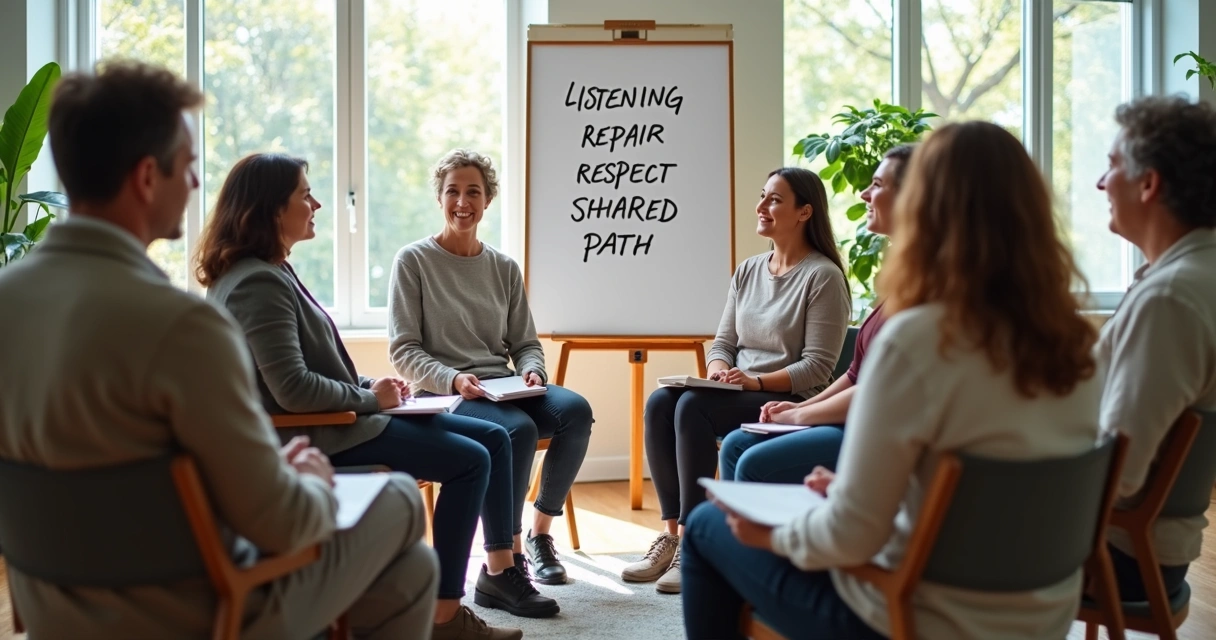
How we can shift a group’s language in practice
Changing symbolic language takes attention. It also takes courage, because old phrases often feel normal. We think groups can begin with a few simple moves.
Notice repeated metaphors. Write down the phrases your group uses under stress.
Ask what each phrase invites. Does it invite attack, retreat, blame, or repair?
Name identity triggers. Be honest about which symbols people treat as untouchable.
Offer a better frame. Replace loaded imagery with language that keeps dignity intact.
Repeat the new frame. One wise phrase said once rarely changes a culture.
This work may sound small. It is not. Group culture is often carried in ordinary sentences. A better conflict response usually begins there, in the language that sets emotional tone before decisions are made.
Conclusion
When we listen closely to a group in conflict, we hear more than opinions. We hear its symbols, loyalties, fears, and hidden rules. Symbolic language tells people whether to close ranks, strike back, defend honor, or stay present. That is why conflict work is never only about content. It is also about meaning.
If we want groups to respond with more maturity, we need language that can hold truth without turning tension into destruction. The words must be honest. They must also leave room for conscience. That is where better group responses begin.
Frequently asked questions
What is symbolic language in conflict?
Symbolic language in conflict is the use of metaphors, labels, images, and shared phrases that shape how a group understands tension. When people call conflict a war, a wound, or a test, they are not just describing it. They are giving it meaning that guides emotion and behavior.
How does language affect group conflict?
Language affects group conflict by directing attention and setting emotional tone. Some words increase fear, blame, and division. Other words support reflection, dignity, and dialogue. The language a group repeats often becomes the pattern it acts out.
Can word choice escalate group tensions?
Yes. Word choice can raise tension very quickly. Terms linked to attack, betrayal, shame, or contamination can make people feel threatened and defensive. Once that happens, the group may react faster and listen less.
How to improve group communication skills?
We can improve group communication skills by noticing repeated phrases, slowing down loaded language, and choosing frames that support clarity and respect. It also helps to ask what a certain phrase invites people to do. Good group communication grows when language stays honest without becoming hostile.
Why is symbolic language important here?
Symbolic language is important here because it shapes conflict before solutions are discussed. It influences whether people feel under attack or called to responsibility. In many cases, changing the symbolic frame is the first step toward a steadier and more human group response.